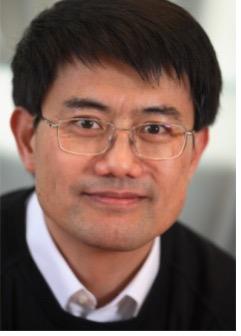
Xiaobo Chen has graduated with distinction from Tsinghua University (China) in 1983. He secured a Ph.D. in Hydrodynamics at the Ecole Centrale Nantes (France) in 1988. After achieving his post-doctoral fellowship from Institute Francais du Petrole, he joined Bureau Veritas in 1991. He has worked successively as a research engineer in BV’s Ocean Technology Department and in the Research Department of the Marine Division, Head of the Hydrodynamics & Mooring Section, Director of Deepwater Technology Research Centre in Singapore, and now Research Director. He has been a member of the IACS working group WD-SL and the ISSC Technical Committee on Loads and chaired the IACS-HPT01 working group on harmonisation of the Common Structure Rules.
Throughout this period, he has been very active in the theoretical research of free surface flows and wave loading as well as applications to the sea-keeping assessment of FPSOs, semi-submersibles, containerships, LNG carriers and high-speed vessels. He has written over a hundred technical papers for presentation to major international conferences and publication in a variety of industry publications, including the Journal of Fluid Mechanics, Journal of Engineering Mathematics, Journal of Ship Research, Ship Technology Research, and Marine Structure. His original contributions include the middle-field formulation for the computation of second-order wave loads and the analytical features of unsteady ship waves. Furthermore, the HydroSTAR software was developed during his Ph.D. studies and has been continually enhanced during his time at Bureau Veritas so that it is now widely regarded in the offshore industry and routinely used by industry companies to evaluate first-order and second-order wave loading and vessel response.
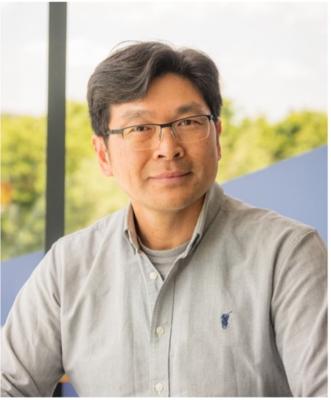
Qiuhua Liang is Chair Professor of Water Engineering at Loughborough University, UNESCO Chair in Informatics and Multi-hazard Risk Reduction, and a Fellow of the Royal Academy of Engineering (FREng), one of the UK’s highest honours for engineering. His research has helped shape the evolution of modern computational hydraulics through pioneering advances in high-performance numerical modelling and digital technologies for flood and multi-hazard risk management, with applications to flooding and other natural hazards, including landslides, debris flows and tsunamis.
Professor Liang developed the open-source High-Performance Integrated Hydrodynamic Modelling System (HiPIMS), a multi-GPU modelling platform adopted by researchers, government agencies and practitioners in around 40 countries for flood risk assessment, forecasting and emergency management. HiPIMS has been deployed within the UK’s National Digital Twin Programme and showcased by the UK Environment Agency as a flagship impact case study demonstrating how research investment can transform flood and coastal risk management.
Professor Liang has founded or leads several major international initiatives, including the UNESCO Chair in Informatics and Multi-hazard Risk Reduction, the Global Partnership for Smart Informatics and Multi-hazard Reduction (SIMR), and the IRDR International Centre of Excellence on Informatics and Disaster Resilience (ICEIDR). In recognition of his pioneering contributions to computational hydraulics and disaster resilience, he received the 2024 Prince Sultan Bin Abdulaziz International Prize for Water.
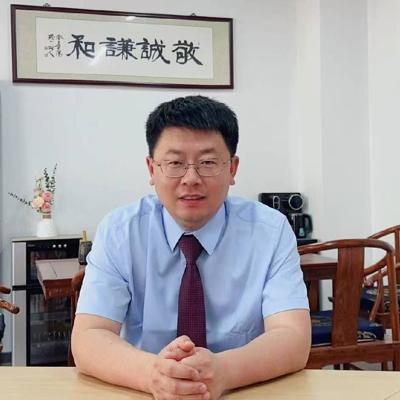
Yuning Zhang is Professor at the School of Energy, Power and Mechanical Engineering, North China Electric Power University (NCEPU), and serves as the Associate Dean of the International Education College. He earned both his bachelor’s and master’s degrees from Tsinghua University, and later obtained his Ph.D. from the University of Warwick. His research focuses on cavitation and bubble dynamics. In 2014, he joined NCEPU and established the Fluid Physics Laboratory, where he acts as Principal Investigator (PI). His work involves experimental studies on single-bubble cavitation using high-speed photography, with particular emphasis on the underlying mechanisms and scaling laws governing cavitation collapse. He has published over 100 papers in journals such as Physics of Fluids and Journal of Hydrodynamics. He serves as an Executive Editor of the Journal of Hydrodynamics. Additionally, he is a member of the National Technical Committee on Industrial Metrology (MTC46) and the National Technical Committee on Household Electric Appliances Standardization (SAC/TC46). Within NCEPU, he holds the position of Vice Chair of the Degree Committee of the School of Energy, Power and Mechanical Engineering and serves on the University’s Interdisciplinary Degree Committee. To date, he has supervised more than 100 master’s and doctoral students, including two recipients of the Beijing Outstanding Undergraduate Thesis Award, three winners of NCEP Outstanding Master’s Thesis, and two winners of NCEP Outstanding Doctoral Thesis. He founded the Young Scholars Salon in Energy and serves as its Chair; the event has been successfully held for three consecutive editions.
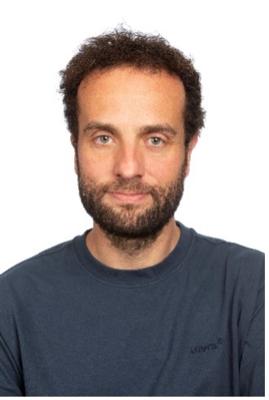
Alexandre Presas Batlló is an Associate Professor and researcher in the Department of Fluid Mechanics at the Universitat Politècnica de Catalunya (UPC) in Barcelona, Spain, where he leads the Center for Industrial Diagnostics and Fluid Dynamics (CDIF-UPC). He specializes in fluid dynamics, hydraulic turbomachinery, and structural dynamics, with a primary focus on the dynamic behavior, vibration, and condition monitoring of hydro turbines. Through his leadership at CDIF-UPC, he drives key European and international research projects aimed at advancing renewable energy technologies and improving power plant reliability.

Dongfang Liang is Professor of Hydrodynamics and Chair of the Civil Engineering Subject Group at the Department of Engineering, University of Cambridge. He is a Trustee, Fellow and Director of Studies at Churchill College, Cambridge. He is a Chartered Engineer and Chair of the Cambridgeshire Branch of Institution of Civil Engineers. He obtained his BEng and PhD degrees from Tsinghua University, China. His research interests lie in hydrodynamics, environmental engineering, and microfluidics, in which fields he has published over 250 refereed journal papers. He is currently External Examiner for the MSc Industrial Construction Management programme at Swansea University and Visiting Professor at Kumamoto University, Xiamen University, Lanzhou Jiao Tong University and Nanjing Hydraulic Research Institute. He serves as Associate Editor for Journal of Hydrodynamics, Lifeline Emergency and Safety, Journal of Safety Science and Resilience and Maritime Engineering. He sits on the Hydrometry committee (CPI/113) of the British Standards Institution (BSI).
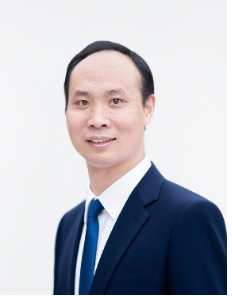
Shizhao Wang is a Professor at the Institute of Mechanics, Chinese Academy of Sciences. He earned his Bachelor's degree in Naval Architecture from Harbin Engineering University in 2006 and his Ph.D. in Fluid Mechanics from the University of Chinese Academy of Sciences in 2011. His research focuses on turbulent flows and computational fluid dynamics, with a particular emphasis on advancing the physical understanding and numerical methodologies for unsteady flows and hydrodynamics. His current work encompasses the development of wall-layer models for large-eddy simulation, numerical methods for unsteady hydrodynamics, and the dynamics of vortical flows. He has authored over 80 peer-reviewed publications in prestigious journals, including Annual Review of Fluid Mechanics, Journal of Fluid Mechanics, and Journal of Computational Physics. He currently serves as Director of the State Key Laboratory of Nonlinear Mechanics, Editor for Journal of Hydrodynamics, and Director of the Hydrodynamic Committee within the Chinese Society of Theoretical and Applied Mechanics.
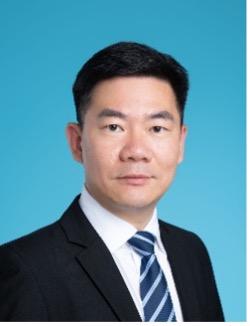
Professor TANG Hui is a Professor of Mechanical Engineering at The Hong Kong Polytechnic University. He holds BEng and MEng degrees in Fluid Mechanics from Tsinghua University and a PhD degree in Aeronautical Engineering from University of Manchester. After graduation, he did a postdoc training at the Department of Naval Architecture and Marine Engineering, University of Michigan – Ann Arbor. His research spans both fundamental and applied fluid mechanics, with a strong emphasis on flow control and fluid–structure interaction, and most recently, the integration of AI into fluid dynamics. He has published over 100 papers in leading international journals in the related area.
Professor Tang is a globally recognized leader in his field. In 2024, he was elected a Fellow of the Royal Aeronautical Society (FRAeS), and in 2025, he chaired International Symposium on AI for Fluid Mechanics (ISAIFM2025) in Hong Kong. He will co-chair the 33rd International Conference on Computational & Experimental Engineering and Sciences (ICCES2027) in Summer 2027, which will be held in Jeju Island, Korea. He serves on the editorial boards of several international journals and holds significant leadership roles, including Secretary-General of the Hong Kong Society of Theoretical and Applied Mechanics (HKSTAM), Deputy Director of the Intelligent Fluid Mechanics Professional Group of the Chinese Society of Aerodynamics, and Committee Member of the Hydrodynamics Specialty Group, Chinese Society of Theoretical and Applied Mechanics (CSTAM).
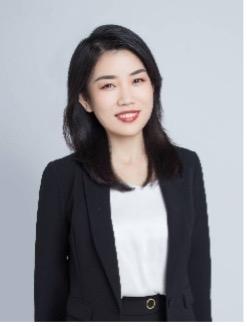
Researcher BU Shuxia is a Researcher at China Ship Scientific Research Center (CSSRC). She has long been engaged in fundamental and applied research on ship hydrodynamics, focusing on ship intact stability, damaged stability, and human-machine-environment ship performance simulation. In recent years, she has undertaken more than 20 research projects sponsored by the Ministry of Industry and Information Technology, the National Natural Science Foundation of China, and other institutions. She has published over 80 academic papers, obtained more than 40 patents and over 50 software copyrights, and submitted more than 30 proposals to the IMO. She was awarded the Excellent Young Scientists Fund of the National Natural Science Foundation of China, selected as Young Top-notch Talent of China State Shipbuilding Corporation, and Young Talent in the Support Program of China Association for Science and Technology. She serves as a member of the ITTC Technical Committee on Wave Stability and the ITTC Committee on Ship Mechanics, Deputy Director of the Youth Committee of the Chinese Society of Naval Architects and Marine Engineers, and an editorial board member of both the Chinese and English editions of Journal of Hydrodynamics and several other journals.


E-Mail: fengzhengyncepu@163.com